
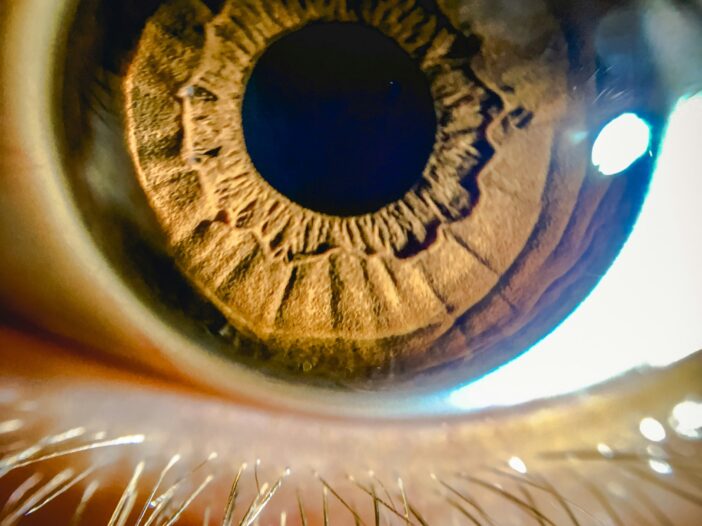
In a dark time, the eye begins to see.
— Theodore Roethke
There’s something almost perverse about that line — that the conditions most hostile to sight are precisely what sharpens it. But as people who have done serious inner work, don’t we recognize the truth of it immediately? The descent, the difficult passage, the season you’d rather skip: these are reliably where the deeper seeing happens.
This month at Haden, we’re sitting with Vision as our theme — and we mean that in both directions at once.
Inward: the slow, practiced art of seeing yourself more clearly. The kind of seeing that active imagination, dreamwork, and spiritual direction cultivate. The eye that learns to look without flinching, without flattering, without turning away.
And outward: the prophetic, communal capacity to see through the noise of a fractured moment toward something true. The shaman’s vision. The mystic’s sight. The kind of seeing that returns from its descent with something to offer the community waiting at the edge of the forest.
These aren’t two different kinds of vision. They’re the same capacity, exercised at different scales.
Every tradition we draw on at Haden knows this. Jung’s descent into the Red Book wasn’t a private indulgence — it was the work he had to do to have anything worth saying. Hildegard of Bingen didn’t keep her visions to herself; she painted them, wrote them, shared them with anyone who needed to see. Black Elk’s great vision, received at age nine, was always understood as a gift for his people, not for him alone. The shaman journeys into darkness so the tribe can see.
You — reading this, doing this work — are a Seer. You may not call yourself that. You may not feel like it on an ordinary Tuesday. But the capacity is there, and the world needs it exercised right now more than it has in a long time.
In this issue, we’ve gathered resources across traditions and media genres to help you practice that seeing — in your inner life, in your communities, and in this particular dark time we’re all navigating together.
Never miss an issue of our free Hadens Resource Guide …
In this issue …
- A Vision for Haden — A letter from Executive Director Corey Keyes, and an invitation to support our Alumni Giving Challenge through May 31
- The Seer: A Resource Guide — Books, films, music, and visual art across four traditions — organized by how much time you have
- Quick Dip (5–20 minutes) — Poems, images, and short videos you can enter right now
- A Full Sitting (up to an hour) — Albums and documentaries worth clearing an afternoon for
- Deep Dive (many hours) — Books and films that will stay with you for months
- Apply by May 31: One-Year Dream Work Program — The deadline for our accelerated dream work certification. Learn more and apply here.
- Almost Last Call: 2026 Summer Dream & Spirituality Conference — Registration is still open, but not for long. Register here.

A Vision for Haden
Soul companioning is a delicate craft among mysterious forces. Spiritual directors and dream workers often align with Seer archetype energy, and that mantle scares the heck out of me. I’m a bit anxious every time I prepare to sit with a seeker or dreamer. I know if I ever lose this awe-full sense of a task requiring cosmic assistance beyond my personal skill, it will be time to stop offering it. We dip into the deep currents of Psyche, an alchemical swirl which is no place for over-confidence.
It is natural for any vessel to take pride in the fine wine poured into it, but absurd to take credit for it. We stay steady when we stay humble.
The Latin root of humble is, of course humus, meaning earth and ground. In the Old French, humble literally meant on the ground. I endeavor to embody this literal sense of the term in my preparatory practices for discernment. I begin with my bare feet touching soil, sit erect and chant through my body’s chakras from the seat of my existence in the root chakra, through my creative center, personal will, heart, voice, third eye and, finally, crown. This forms a straight-line conduit from the earth that birthed and sustains me, through my body/spirit manifestation, connecting to Holy Mystery above and beyond me.
A grounded conduit I become.
I believe this likely mirrors the labyrinth walk Bob Haden took in 1994, when he channeled the sacred will to create the Haden Institute. Soon he was gathering restless souls, training them in ways to seek and attend the Inner Knowing, then sending them out into the world to help others plumb similar depths and heights.
Allen Proctor was similarly grounded when he expanded the reach and scope of Haden, truly taking us worldwide in our infinitely intimate work.
Bob and Allen brought us far. And now Allen has placed this beloved, wild and wonderful institution into our hands. We are now a 501c(3) nonprofit corporation. The world is more parched than ever for soul work, and we are uniquely qualified to train and support highly skilled practitioners.
I observe the treasures you bring, the trust you show, the gifts you have received, your passions and wisdom. All of this intermingles with the troubling changes in our nation and world, the rise of a distracted, frenzied cynicism, and millions of souls skittering across the surface of their longing, neglected depths.
It is up to us. The Haden Institute will be as enduring a blessing as we decide to make it.
Together, we are fixing our own path, and Haden needs every one of us. Here’s how you can contribute and help inform our collective, evolving vision and mission:
1. Support us with referrals. Word of mouth is how most folks find Haden, and this drives our primary source of revenue (tuition). Who do you know that already feels like part of our community? Invite them to register for our free webinar series or come to our next virtual information session and learn about our training programs on June 25.
2. Support us with your presence. Haden’s sacred container has never been stronger. Come to our next dreamwork or spiritual direction intensive — as an alumnus, you’re welcome back at a discounted rate. Come to Summer Dream and Spirituality Conference (May 27-June 1) as a virtual or in-person participant. Sign up for one of our new short courses (coming this fall — stay tuned for details soon!).
3. Support us materially. Some of you have already given to our first-ever Alumni Giving Challenge. Thank you so much for your quick, generous response! We’re trying to raise $40,000 in donations that will be matched, dollar-for-dollar, before our May 31st deadline. Help us reach our total goal of $80,000 by giving at whatever level makes sense for you right now.

Haden has contributed to a deep awakening that continues to rise in our world. Haden-trained soul companions and dream workers are already in practice on five continents. But still, the need outpaces our offerings.
It’s in our hands.
The Seer: A Resource Guide
Across traditions — Jungian depth psychology, Christian mysticism, shamanic practice, esoteric schools — the Seer is the figure who has learned to look. Not at spectacular things necessarily, but with sufficient attention and inner clarity that what is always present begins to reveal itself. Every tradition names this differently: the active imagination of depth psychology, the contemplatio of the Christian mystics, the shamanic journey, the visionary altered state. But they share a common structure: a descent into the dark, a period of encountering what is real, and a return with something to offer.
The resources below span four traditions — Jungian, Mystical, Shamanic, and Esoteric — organized simply by how much time you have to give them.
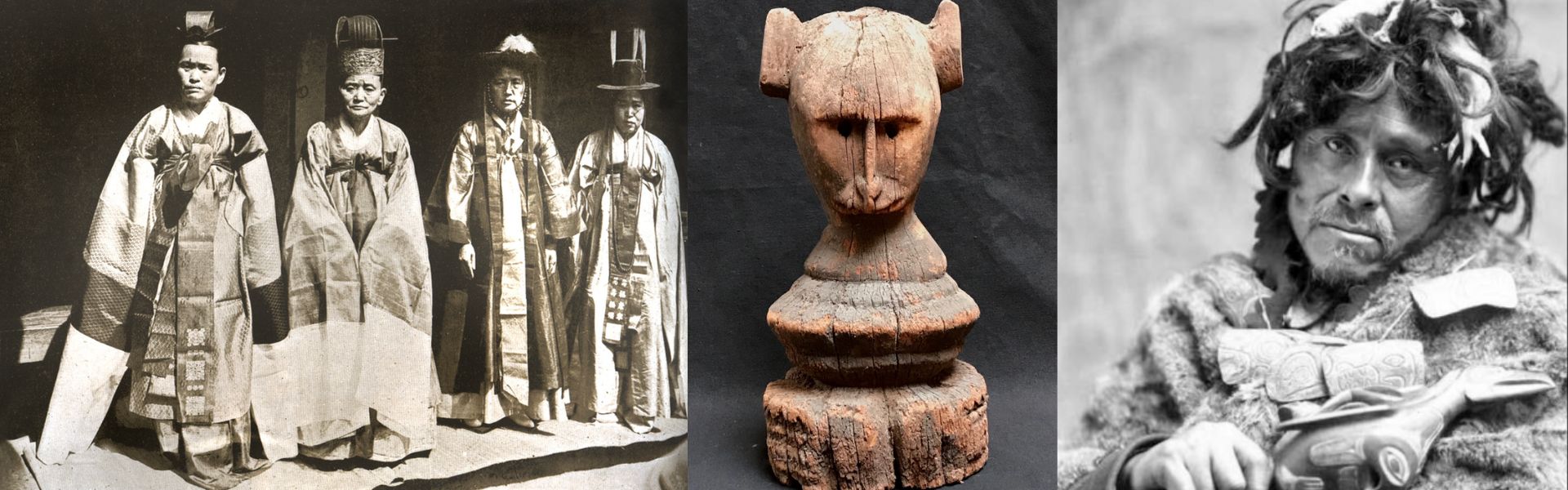
Quick Dip — 5 to 20 Minutes
A poem, an image, a clip. Something you can enter and actually experience before moving on.
Jungian
Theodore Roethke, “In a Dark Time” (poem)
The line that opens this issue comes from one of the great visionary poems in the American canon. Roethke wrote it out of his own experience of psychological darkness, and it moves the way active imagination does: without flinching, descending through shadow and confusion toward something that can finally be called clarity. Read it slowly, twice.
Mary Oliver, “The Summer Day” (poem)
Oliver’s entire poetic project is a training in how to look — at the natural world, yes, but ultimately at what looking teaches us about being alive. “The Summer Day” ends with one of the most direct and searching questions in American poetry. “When Death Comes” is another fine entry point into her practice of visionary attention.
Giorgio de Chirico’s metaphysical paintings (visual art)
His empty piazzas, long shadows, and mysterious presences feel like images from the threshold of a dream. Jung was drawn to the same symbolist tradition de Chirico came from, and the uncanny recognition readers feel looking at his work is itself a kind of Jungian experience. Widely available online through major museum collections.
Mystical
Hildegard of Bingen’s illuminations from Scivias (visual art)
These twelfth-century images — the Cosmic Egg, the Mandala of Divine Light, the Ring of Fire — are among the oldest and most striking examples of vision-as-art in the Western tradition. Hildegard didn’t paint scenes she imagined; she rendered what she saw. High-resolution images are widely available online; search “Hildegard Scivias illuminations” or start here for some context and the paintings.
Odilon Redon, “The Eye Like a Strange Balloon Mounts Toward Infinity” (visual art)
A giant eyeball floats skyward over a darkened landscape, trailing a human head like a gondola basket. This nineteenth-century French symbolist image is one of the strangest and most enduring depictions of vision as a force that escapes ordinary gravity. It’s in MoMA’s permanent collection and widely available online. The title alone is worth a few minutes of reflection.
Thomas Merton’s Louisville Vision (short reading)
In a single passage from Conjectures of a Guilty Bystander, Merton is standing on a busy Louisville street corner when he is suddenly ambushed by an overwhelming love for every stranger passing by. It’s one of the most disarming accounts of mystical seeing in modern spiritual writing — and brief enough to read in five minutes. Read it here (with images from the actual street corner).
William Blake, “Auguries of Innocence” (poem)
Maybe you know the opening lines of this beloved poem:
To see a world in a grain of sand
And a heaven in a wild flower,
Hold infinity in the palm of your hand
And eternity in an hour.
But the rest of the poem is equally strange and direct. Blake wasn’t writing metaphors; he believed he was writing what he saw. If you’ve never spent time with him as a practicing visionary, this poem is an accessible entry point.
Shamanic
Huun-Huur-Tu, full live performance on KEXP (music, ~45 min — dip in anywhere)
Tuvan throat singers from Siberia, where throat singing is itself a shamanic practice — the voice producing two and three simultaneous notes, creating harmonics that seem to come from the landscape rather than a human body. You don’t need to listen to all forty-five minutes; five will change how you hear sound.
Alberto Villoldo on shamanic seeing (short talk, YouTube)
A trained anthropologist who apprenticed with Amazonian and Andean shamans for decades, Villoldo speaks with unusual rigor about the epistemology of shamanic vision — how it works, what it perceives, how it maps onto Jungian notions of the unconscious. Search YouTube for his name; most clips run 10–20 minutes.
Esoteric
Leonora Carrington’s paintings (visual art)
Mexican surrealist painter, active reader of Jung, practicing alchemist. Carrington’s paintings feel like carefully reported visions — densely symbolic, feminine, alive with animal intelligence and mythological cross-reference. The Giantess and The Pomps of the Subsoil are both widely available online, as is a fine recent documentary about her life. Spend twenty minutes with her work and notice what it stirs.
A Full Sitting — Up to an Hour
An album, a lecture, a documentary. Something worth clearing your afternoon for.
Jungian
Joseph Campbell with Bill Moyers, The Power of Myth, Episode 3: “The First Storytellers” (video, ~55 min)
This is the episode in the series that goes deepest into the shaman as the original visionary — the one who descends into other realms on behalf of the community and returns with something true. Campbell’s warmth and extraordinary range make it accessible to anyone, and the Jungian resonances throughout are unmistakable. The full series lives at billmoyers.com; individual episodes are also searchable on YouTube.
Steve Roach, Structures from Silence (music, 45 min)
The gold standard of ambient music for inner journeying since its release in 1984. Roach’s record is minimalist, spacious, and genuinely non-directive — it creates a container without filling it. Therapists and depth workers have used it for decades, and it remains the best musical companion for active imagination or contemplative sitting that most people haven’t discovered yet. Available on all streaming platforms.
Mystical
Dead Can Dance, Into the Labyrinth (music, ~50 min)
Lisa Gerrard and Brendan Perry make music that feels genuinely outside of time — ecstatic, mournful, ceremonial, and strangely familiar, as if it’s arriving from somewhere you’ve been before. Into the Labyrinth is their most lush and mystical record. Play it in a quiet room and let it do what it does. Available on all streaming platforms.
Peter Gabriel, Passion (music, ~70 min)
The soundtrack Gabriel composed for The Last Temptation of Christ draws on global percussion, Middle Eastern and African instruments, and deep drone to create one of the most transportive records in any genre. It doesn’t require the film; it works on its own as an extended meditation on the experience of being inhabited by something larger than the self. Available on all streaming platforms.
Shamanic
Heilung, Lifa — Full Concert Film (video, ~75 min)
Norse/Germanic ritual folk music performed as ceremony. The instruments are Iron Age; the lyrics are drawn from ancient runic inscriptions; the performance is part concert, part shamanic rite. Lifa was Heilung’s debut live performance, filmed at Castlefest in the Netherlands in 2017, and it’s one of the most extraordinary music performances available anywhere online. Watch the full film free on YouTube. If you’d rather dip a toe in first, start with “Krigsgaldr.”
Wardruna, Yggdrasil (music, ~52 min)
Einar Selvik renders the Elder Futhark runes as music rooted in Norse shamanistic tradition — more melodic than Heilung, and deeply concerned with the world tree that connects all realms of existence in Norse cosmology. The title alone situates the whole project. Available on all streaming platforms.
Esoteric
Stanislav Grof, lecture on holotropic states of consciousness (video, ~60 min)
Grof spent decades mapping non-ordinary states — first through LSD therapy in the 1960s and ’70s, then through the breathwork method he developed — and his cartography is more Jungian in spirit than almost anything produced by academic psychology. His lectures are a rigorous and generous introduction to territory that you will recognize as a depth worker. Search “Stanislav Grof holotropic” on YouTube; multiple full lectures are freely available.
Deep Dive — Many Hours
Books and films that will reshape the landscape. Return visits required.
Jungian
Visions: Notes of the Seminar Given in 1930–1934, C.G. Jung
Two volumes in which Jung leads a seminar through the ongoing active imagination visions of Christiana Morgan — close, careful, sustained attention to visionary material in real time. Less famous than Memories, Dreams, Reflections but more directly useful for anyone practicing inner work. This is Jung as teacher, not theorist, and the visions themselves are remarkable. Hard copies of this two-volume set are pricey and hard to come by — consider checking out and reading a digital copy with an account at The Internet Library.
The Red Book (Liber Novus), C.G. Jung
Jung’s own recorded visions from 1913–1930, illustrated in his own hand in illuminated manuscript style. The shamanic and mystical dimensions of this work are routinely underemphasized — this is the record of what it actually looked and felt like to descend, encounter, struggle with, and return from the depths of the unconscious. Whatever you think you know about Jung, this book will deepen or revise it.
Mystical
Henri Corbin, Alone with the Alone: Creative Imagination in the Sufism of Ibn ‘Arabi Corbin is the philosopher who coined the term mundus imaginalis — the imaginal world — that Jung and later Hillman adopted as the foundation of depth psychology’s understanding of inner vision. This book explores that territory through the lens of Islamic mysticism, specifically Ibn ‘Arabi’s doctrine of the creative imagination as the faculty through which the divine becomes perceptible. It’s demanding reading, but it’s also the closest thing to a philosophical account of why inner vision works that any tradition has produced. Readers who have wondered about the metaphysical underpinnings of active imagination will find it revelatory. Corbin and Jung were in direct dialogue, and the resonances throughout are unmistakable.
Into Great Silence (2005, dir. Philip Gröning) (film, ~3 hours) A documentary filmed inside the Grande Chartreuse — one of the most austere monasteries in the world — with almost no narration, no interviews, no score. Just the rhythm of contemplative life: the offices, the silences, the light moving across stone walls, the faces of monks in prayer. Gröning waited sixteen years for permission to film there, then spent months inside alone. The result is less a document about contemplative seeing than an experience of it — the film itself becomes a practice. It won the European Film Award for Best Documentary and is available on MUBI and other platforms. Clear a long afternoon and don’t multitask.
Conjectures of a Guilty Bystander, Thomas Merton
The Louisville passage is the entry point, but the whole book rewards slow reading. This is Merton at his most open and most directly engaged with the question of how contemplative seeing relates to the world beyond the monastery walls — still urgent, still searching, still funny in the ways that Merton always was.
Shamanic
The Way of the Shaman, Michael Harner
Foundational, and unusual for having been written by a trained cultural anthropologist who became a practitioner himself. Harner gives both the intellectual scaffolding and the experiential practices — core shamanic journeying is accessible here in a way it isn’t in more purely academic treatments. The Foundation for Shamanic Studies he founded is still active at shamanism.org.
Black Elk Speaks, John G. Neihardt
Black Elk’s Great Vision, received at age nine, is one of the most elaborated visionary experiences in world literature — and it was always understood by Black Elk himself as a gift given not to him personally but to his people. His life’s attempts to fulfill the vision, and his grief over what was lost, form the spine of this extraordinary account. Essential reading in any conversation about shamanic seeing.
Embrace of the Serpent (2015, dir. Ciro Guerra) (film, ~2 hours)
Filmed in black and white, set in the Colombian Amazon, following two expeditions decades apart in search of a sacred healing plant. One of the most powerful cinematic meditations on shamanic vision — and on the relationship between indigenous knowing and the Western gaze — ever made. It won the Art Cinema Award at Cannes. Currently available on MUBI and other streaming platforms.
Esoteric
Angeles Arrien, The Four-Fold Way: Walking the Paths of the Warrior, Teacher, Healer, and Visionary
A cultural anthropologist who spent decades synthesizing indigenous shamanic traditions across cultures, Arrien organized her findings around four universal archetypes — and one of them is the Visionary, the one who sees. The book is practical and accessible without being reductive, and it sits unusually well at the intersection of indigenous wisdom, esoteric tradition, and depth psychology. For an issue themed around Vision, having a book that treats the Visionary as a specific archetypal path — with practices and responsibilities — is a genuine gift to readers. Arrien’s work has been used in both therapeutic and organizational contexts, which speaks to its range.
The Cosmic Serpent: DNA and the Origins of Knowledge, Jeremy Narby
Narby, a trained anthropologist, asks a genuinely astonishing question: what if the visions that Amazonian shamans access through plant medicine are actually perceptions of biological reality at the molecular level? His investigation is rigorous, surprising, and deeply humbling — and it arrives at questions that no tradition has yet fully answered.
Plant Intelligence and the Imaginal Realm, Stephen Harrod Buhner
Buhner bridges Jungian imaginal psychology with plant intelligence and shamanic perception in a way that’s both intellectually serious and practically evocative. If you’ve wondered how the Jungian imaginal and the shamanic imaginal are related — whether they’re describing the same territory by different names — this book is a sustained and generous answer.
Fantastic Fungi (2019, dir. Louie Schwartzberg) (film, ~80 min)
Paul Stamets on mycelial intelligence, the deep interconnection of all living systems, and the role of psilocybin in both shamanic vision and the evolution of human consciousness. Beautifully filmed and generously paced, it makes a serious argument about the nature of mind and perception without once feeling like a lecture.
Joan Halifax, The Fruitful Darkness: A Journey Through Buddhist Practice and Tribal Wisdom Halifax is a Zen priest, anthropologist, and longtime student of shamanic traditions, and this book draws all three strands together into an account of what she calls “the dark journey” — the descent that every visionary tradition requires before the return with light. She writes from genuine practice and genuine scholarship simultaneously. The book covers shamanic initiation, the Buddhist bardo, indigenous cosmologies, and the ecology of inner and outer wildness.
The Secret History of Dreaming, Robert Moss
Moss writes beautifully about visionary dreaming across cultures and centuries — its role in prophecy, healing, artistic creation, and historical decision-making. His work reads as both scholarship and invitation.
Coming Up at Haden
Apply by May 31: One-Year Dream Work Certification
The deadline for the one-year accelerated dream work certification program is May 31 — the same day as our Alumni Giving Challenge closes. If the work of attending to dreams, visions, and the images that rise from the deeper self is calling you forward, now is the time to say yes. This opportunity is exclusively for spiritual direction graduates of the Haden Institute. There is no application fee. Learn more and apply here.
Almost Last Call: 2026 Summer Dream & Spirituality Conference
Registration for this year’s Summer Dream and Spirituality Conference is still open. If you’ve been waiting, this is the week to decide! Register here.